My Laments
May be “laments” is being a bit dramatic, but I wanted to acknowledge my feelings about a poignant anniversary.
I’m writing this on a Wednesday. Formerly I would be making my Marmite sandwich for teatime to sustain me as I worked through a long afternoon session at the Moss Clinic.
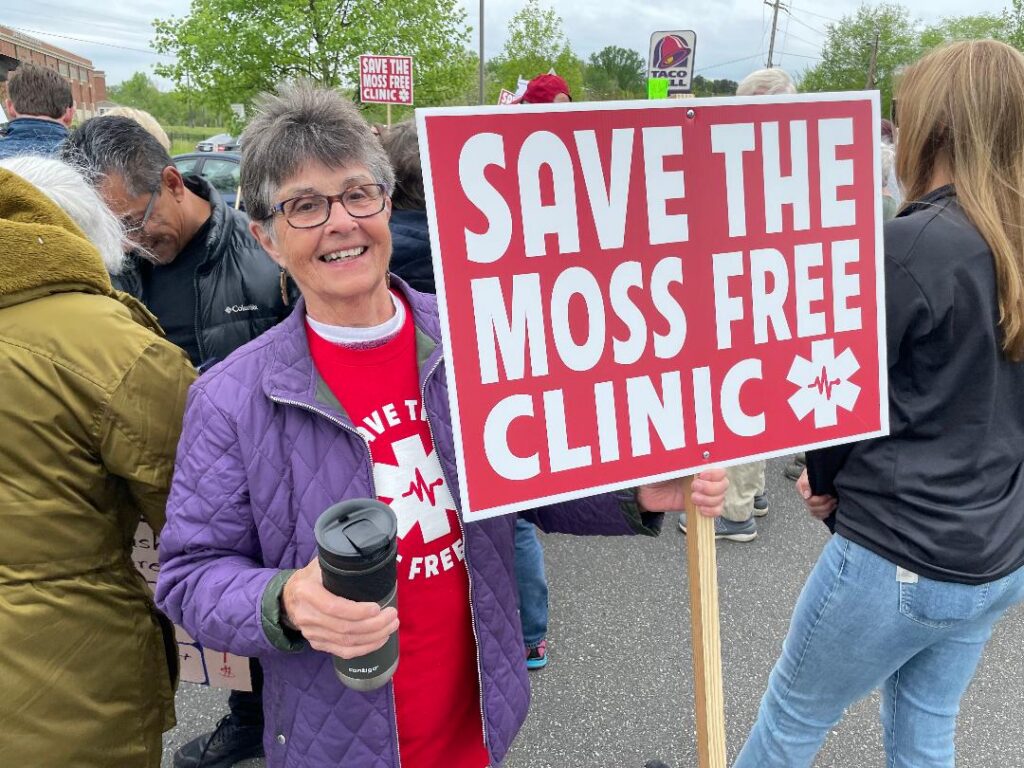
But my lament is that this hasn’t been the case for a year now – June being the anniversary of the Moss Clinic closing for lack of funds.
I still meet a lot of people – often former patients - who are unaware.
“Really? That’s terrible. The clinic was so important” they tell me.
At the same time there are plenty of patients who are aware. All too aware.
Like I.C. a lady in her early 40’s who sent me a message 2 weeks after we closed. “The insulin I was getting for $2 a month is going to cost me over a thousand dollars – even with a discount card!”
Or D.C. the heavyset African American guy with cardiomyopathy causing heart failure, whose fluid retention got completely out of control – again.
He’s still paying off the $33,000 bill he racked up for his hospital admission the first time it happened. But when the clinic closed, he ran out of medicines and the fluid was back. “Getting out of the car I couldn’t breathe” and “my testicles swelled to the size of grapefruits” he told me. He finished up back in the hospital.
Moss Clinic was also acting as a “central fill” pharmacy getting free and discounted medicines from Rx Partnership - whose mission is to “increase medication access to vulnerable Virginians” – and filling prescriptions for patients of 14 other clinics that don’t have a pharmacy.
“It was pretty special what Moss was doing,” Hope Kestle, Rx Partnership Program Director, told me. And how now “eleven of these clinics have no access to medicines other than using retail pharmacies” – some of whom are willing to provide medicines at discounted prices between $5 to $15. But even then “most patients' are on 3 to 5 medicines, and that can add up.”
An Unsustainable course
I lament also that the Fredericksburg Area Regional Health Council (FARHC) – the body created from 11 local community groups, including the predecessor of Mary Washington Healthcare, in 1991 in response to a Joint Resolution of the Virginia legislature concerned for the plight of the underserved medically indigent - was not sufficiently on the ball.
The FARHC acted as board of directors, and as Medical Director I was a part of it. But I was no better at seeingthat we were growing beyond our ability to fund-raise.
The clinic started as a small operation seeing patients in office space donated first by Mary Washington Hospital, then by the health department.
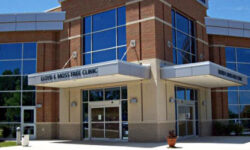
In 2004 a Capital Campaign in combination with Mary Washington Foundation raised an impressive $10 million. Of this, $4 million and change was spent on building the large facility on the MWH campus that from 2007 was the last home of the clinic.
Services expanded to include medical, dental, pharmacy, mental health, eye care, insurance navigator and social services all in one place. Real “one stop shopping” that was great for patients many, of whom had transport problems.
In combination with services donated by Mary Washington Healthcare and other hospitals and local specialists, it provided comprehensive care and received numerous awards - for “Merit and Exemplary Effort in Improving Healthcare for the Medically Underserved.”
But the annual budget grew to $2.2 million.
In a part of the state that is experiencing explosive growth and that has higher than average uninsured, I fear the claim of Eric Fletcher, senior vice president and chief strategy officer at MWHC at the time of Moss closing, that “our community safety net does have the capacity to care for former Moss clinic patients” was over optimistic. I fear patients will not get as good care now.
Without some large organization supporting Moss we seemed to grow beyond our ability to meet the budget through grants and charitable campaigns, and I lament that we did not see this in time to make course corrections – though there was a picture of the Steering Committee of the Capital Campaign and the MWHC Board of Directors in hard hats with shovels, breaking ground on the site for the new clinic building, with a legend grandly promising to “provide perpetual funds to support the clinics operations.”
A Generic Lament
The other lament is that there seems to have been a major shift in philosophy and political ideology. There doesn’t seem to be the same concern for the medically indigent.
I don’t see the General assembly taking on such an issue these days. And we have a federal administration cutting back on Medicare and imposing work requirements. And not supplementing policies for low income participants of the Affordable Care Act. All of which is predicted to create more uninsured, making safety-net clinics like Moss ever more needed.
The private healthcare industry has also undergone a change. Corporations and investment funds are buying up practices and smaller hospitals, and are more focused on the bottom line and benefiting shareholders and stakeholders than patients - MWHC CEO benefits package of $2,181,797 in 2021 – almost the exact same amount as the Moss annual budget - seems to me a good illustration of this imbalance.
People keep asking me, “isn’t there some way you can reopen?” I fear there’s no reason to think we could do any better at fund raising now. And MWHC, who for some reason owned the building ever since it was built with donated funds, has turned it onto an orthopedic clinic.